
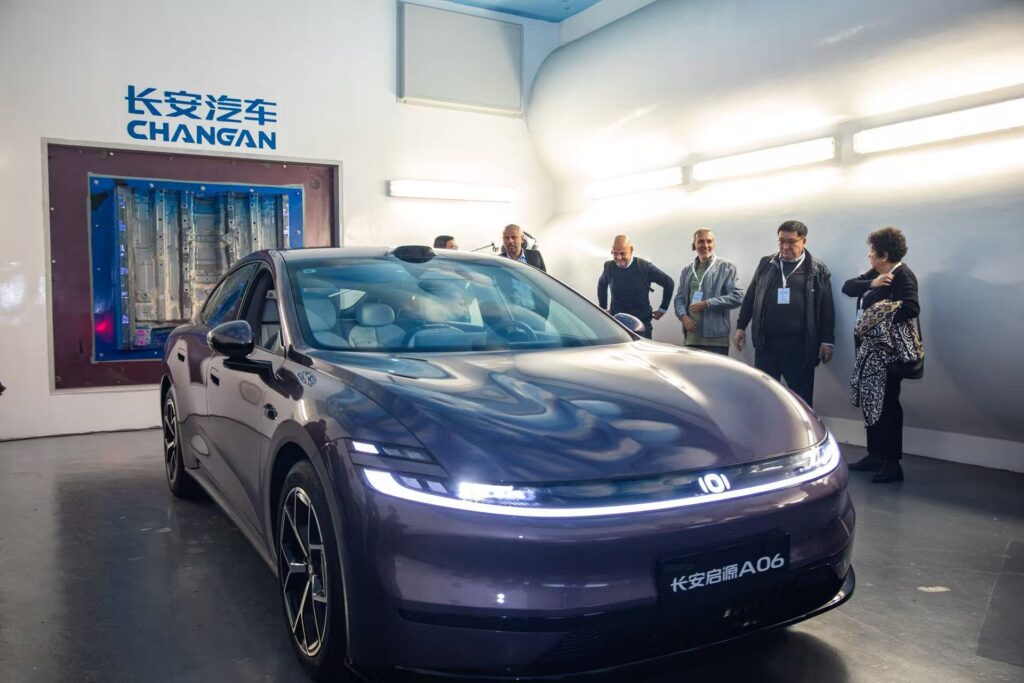
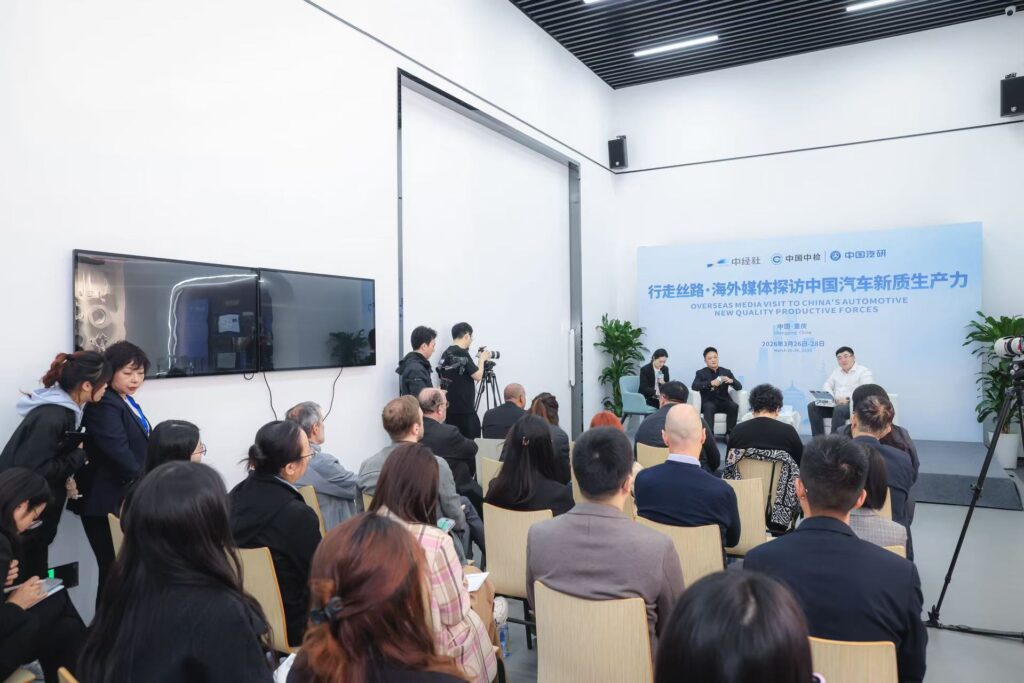
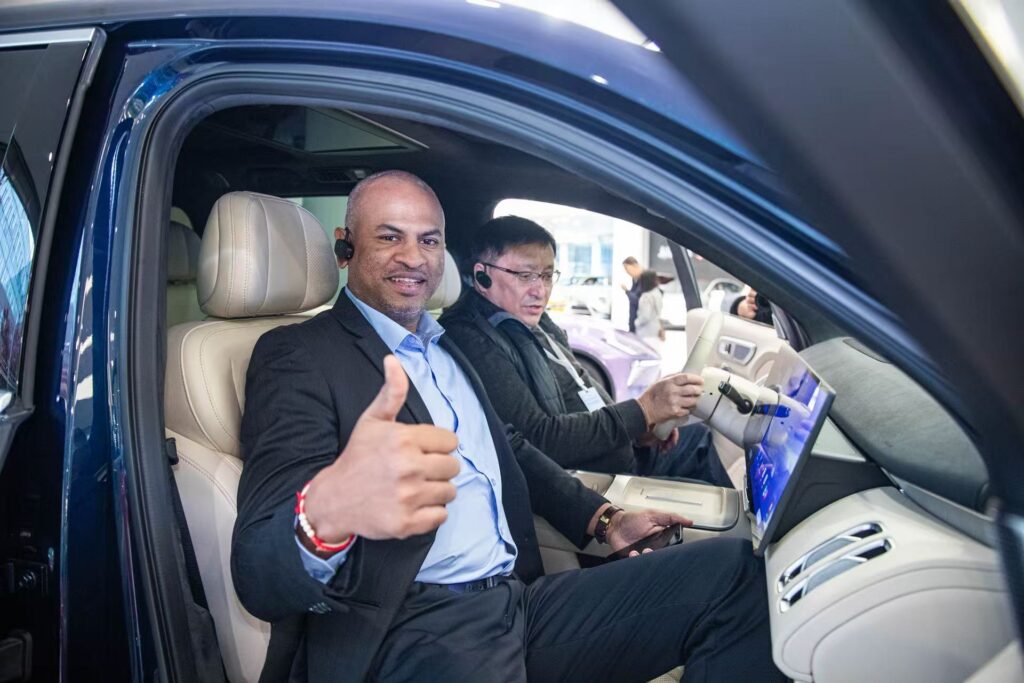
From March 26 to 28, an international delegation gathered in Chongqing for the event “Walking the Silk Road: Overseas Media Explore New Quality Productivity in China’s Automotive Industry.”
Chongqing Event Highlights China’s Automotive Innovation and New Opportunities for Belt and Road Partners.
Chongqing, March 29, 2026: From March 26 to 28, an international delegation gathered in Chongqing for the event “Walking the Silk Road: Overseas Media Explore New Quality Productivity in China’s Automotive Industry.” The program was jointly organized by Xinhua Economic Information Service and China Automotive Engineering Research Institute, bringing together number of participates from varies countries. The initiative sought to showcase China’s rapid technological transformation in the automotive sector and explore new opportunities for cooperation across Belt and Road partner countries.
During the three-day program, participants toured several major automotive innovation facilities in Chongqing. These included the advanced testing laboratories of China Automotive Engineering Research Institute (CAERI), the Changan Global R&D Center, and production facilities linked to Changan Automobile and its new-energy vehicle brand CHANGAN NEVO. Delegates also observed vehicle testing environments such as the Chongqing Xibu Automobile Proving Ground, where vehicles are evaluated under multiple road and environmental conditions including durability, safety, and autonomous driving tests. The proving ground allows manufacturers to simulate more than 60 driving scenarios, testing approximately 200 vehicles per model under dozens of conditions.
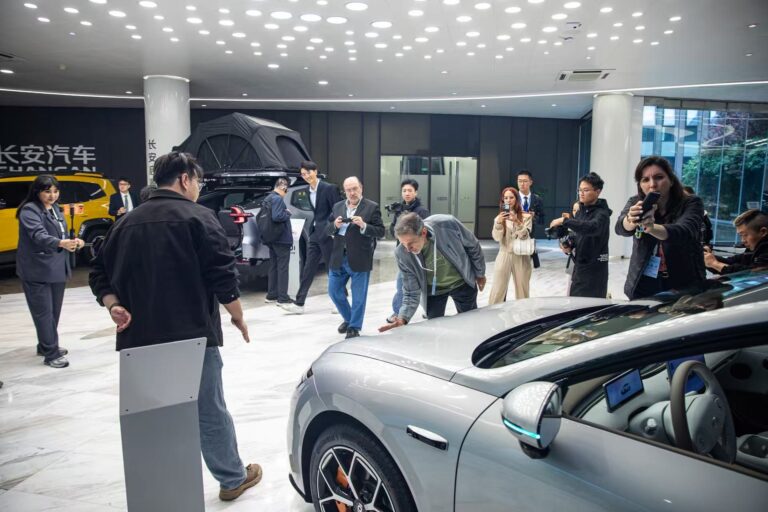
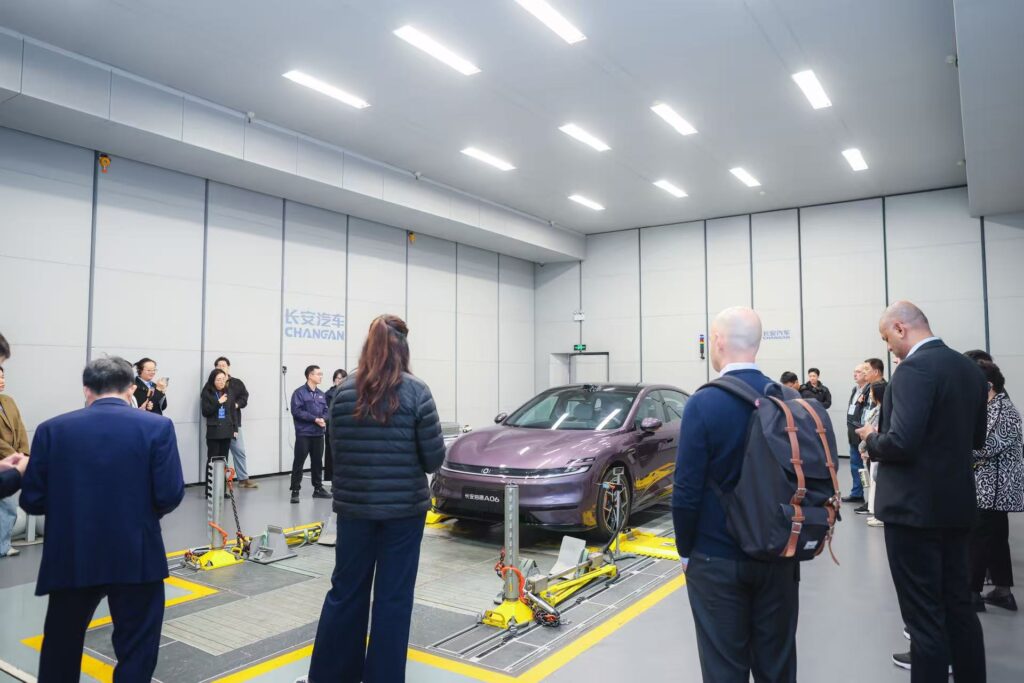
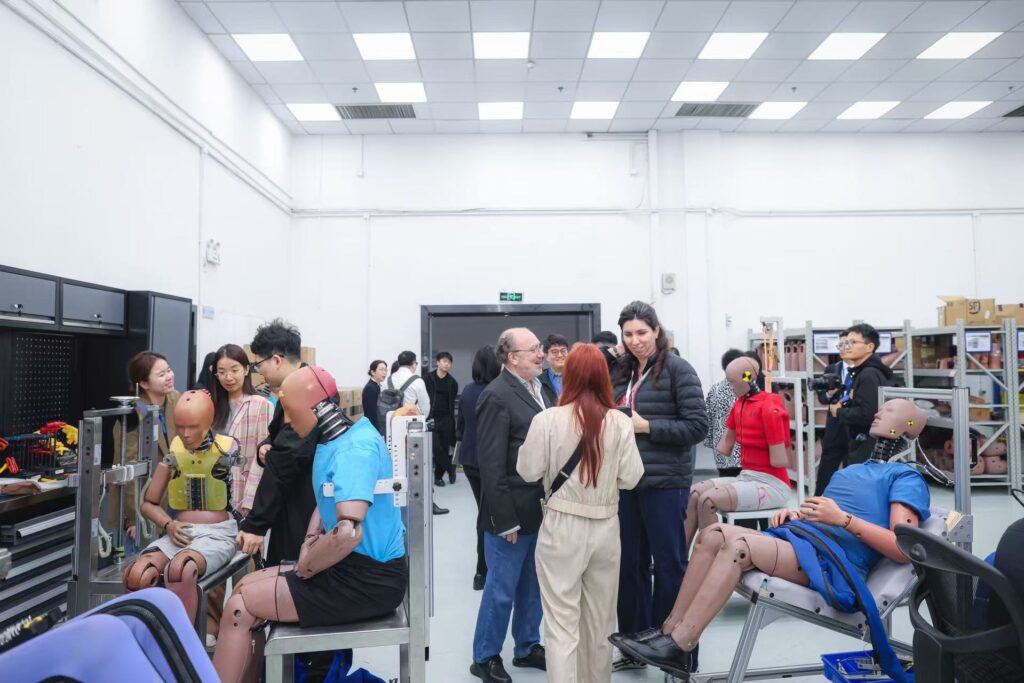
At the CAERI facilities, participants observed crash-test laboratories and vehicle safety evaluation platforms used by domestic and international automakers. One of the institute’s flagship facilities is a 25,000-square-meter crash testing complex equipped with a 294-meter acceleration track capable of accelerating vehicles to 120 km/h before impact, allowing engineers to simulate a wide range of collision scenarios including car-to-car crashes and heavy-vehicle tests. Such infrastructure enables testing standards comparable to those used in the United States and Europe, supporting the international certification of Chinese automotive products. Founded in 1965, China Automotive Engineering Research Institute has developed into one of China’s major national research platforms for vehicle development, testing, and certification. The institute operates several national laboratories focusing on areas such as intelligent connected vehicles, hydrogen energy power systems, and automotive safety technologies. Over the decades, it has supported hundreds of research projects and contributed to the development of numerous national automotive standards.
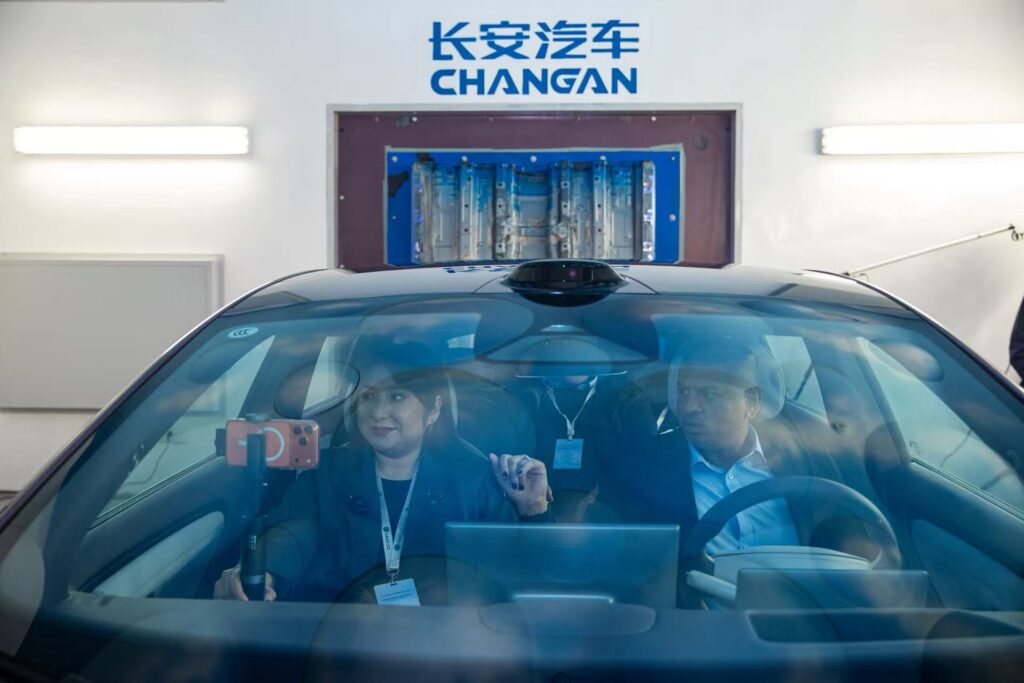
The delegation also explored innovations from CHANGAN NEVO, one of the strategic electric-vehicle brands under Changan Automobile. Changan is among China’s largest automotive groups and operates 21 manufacturing bases and 76 plants worldwide, supported by a global research network of 44 R&D centers across six countries employing more than 18,000 engineers and technicians. Vehicles presented during the visit highlighted China’s progress in intelligent mobility technologies, including digital cockpit systems, advanced driver-assistance platforms, and high-voltage fast-charging battery systems. The NEVO series integrates technologies such as the SDA intelligent driving architecture and next-generation electric powertrains designed for global markets.
The event took place against the backdrop of rapid growth in the global electric vehicle industry. According to international market data, global EV sales have expanded dramatically over the past decade, with major manufacturers competing to dominate the emerging market. Chinese automaker BYD has recently emerged as the world’s leading electric-vehicle producer, selling about 2.26 million EVs in 2025, while Tesla delivered roughly 1.6 million vehicles globally in the same year. In earlier years the two companies were closely matched, with Tesla delivering 1.79 million vehicles in 2024 compared with 1.76 million EVs for BYD.
Chinese automakers such as Changan are increasingly expanding their presence internationally as part of a broader industrial strategy emphasizing innovation-driven growth. This transformation is closely linked to China’s long-term development planning, including priorities expected to be emphasized in the upcoming 15th Five-Year Plan, which places strong emphasis on advanced manufacturing, green technologies, and intelligent mobility systems.
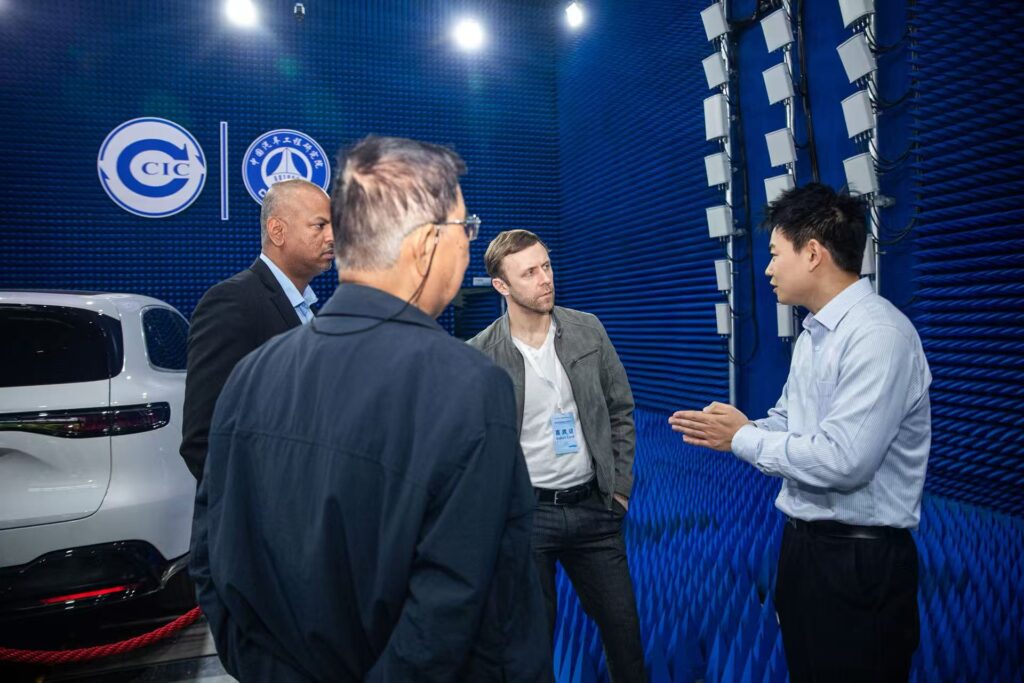
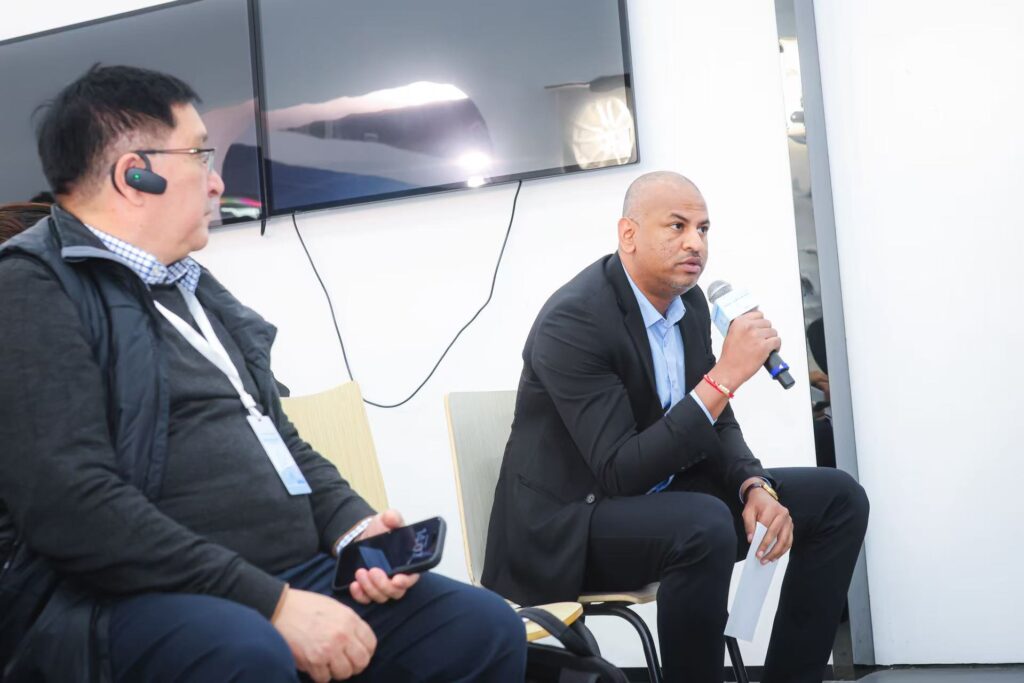
Among the international participants attending the Chongqing program was Yasiru Ranaraja from BRISL, who emphasized the importance of recalibrating automotive supply chains toward Belt and Road partner countries as Chinese automobile exports expand globally. Ranaraja highlighted that Sri Lanka could play a strategic role in this emerging ecosystem due to its location along major Indian Ocean shipping routes. In particular, the Port of Colombo, one of the busiest transhipment hubs in South Asia—could serve as a regional logistics center for automobile distribution, spare-parts supply, and after-sales service networks across South Asia, the Middle East, and Africa. The port handles millions of containers annually, with transshipment cargo accounting for the majority of its traffic, making it one of the key maritime gateways in the region.

He further noted that the Hambantota Industrial Zone, located near the Port of Hambantota, could provide an additional platform for automobile assembly plants and supply-chain integration. With extensive industrial land and direct access to port infrastructure, the zone could host vehicle assembly operations, component manufacturing facilities, and research and development units connected to Chinese automotive companies seeking to expand their production footprint abroad.
As electric vehicles become more affordable and demand grows across emerging markets, analysts expect global automotive supply chains to become more geographically diversified. Countries along the Belt and Road Initiative may therefore play an increasingly important role in logistics, manufacturing, and research collaboration supporting the next generation of intelligent and electric vehicles.The Chongqing program thus highlighted not only China’s rapid technological progress in the automotive sector but also the expanding opportunities for international industrial cooperation as the global mobility transition accelerates.
End.
