
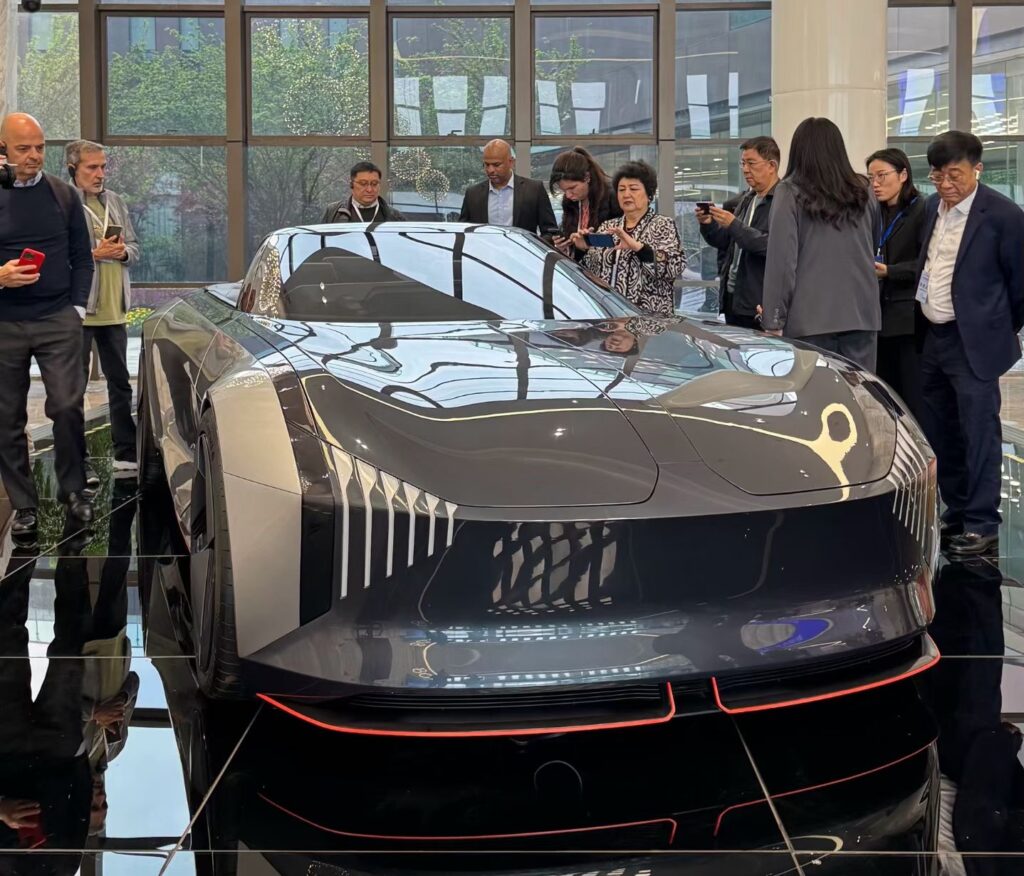
As Chinese automakers expand manufacturing across Asia, Latin America, and Europe, Sri Lanka’s absence from this new automotive geography raises difficult questions about industrial strategy, policy coherence, and long-term economic planning.
Opinion | Did Sri Lanka Miss The Bus To Attract China’s EV Automotive Revolution?
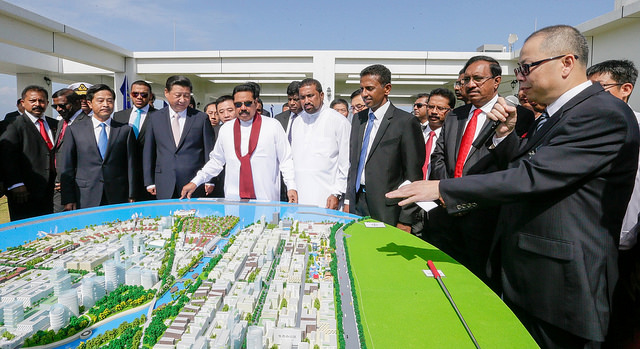
Colombo, April 01, 2026:Over the past decade, few industrial transformations have been as dramatic as China’s emergence as the epicentre of the global electric vehicle (EV) revolution. The question now facing Colombo is whether Sri Lanka, despite its early political alignment with Beijing’s development vision, has missed a historic opportunity to position itself within this rapidly expanding industry. As Chinese automakers expand manufacturing across Asia, Latin America, and Europe, Sri Lanka’s absence from this new automotive geography raises difficult questions about industrial strategy, policy coherence, and long-term economic planning. Sri Lanka was among the earliest supporters of the Maritime Silk Road, which later became a central pillar of the Belt and Road Initiative. The island’s ports, particularly Hambantota Port and the Port of Colombo, were often presented as strategic nodes in this emerging Eurasian logistics network. In theory, this positioning should have placed Sri Lanka in a favorable position to attract manufacturing investment linked to China’s outward industrial expansion. Yet the global map of Chinese automotive investment tells a different story. As countries such as Thailand, Indonesia, Brazil, Pakistan and Mexico have emerged as major destinations for Chinese EV manufacturers, offering targeted incentives, industrial parks, and integrated supply chains.
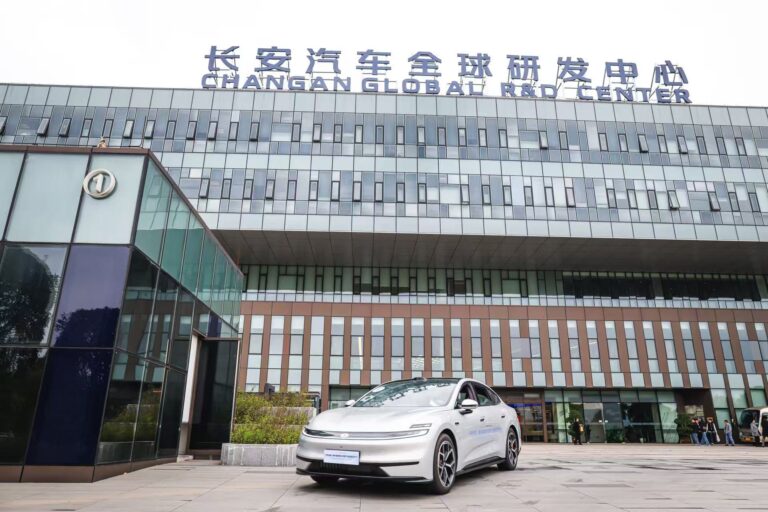
The scale of China’s automotive transformation is difficult to overstate, and according to the International Energy Agency, global EV sales surpassed 17 million vehicles in 2024, accounting for more than 20% of total global car sales. China alone represented roughly 60% of global EV sales, making it the dominant force in the industry. Automakers such as BYD, SAIC Motor, Changan Automobile and Geely are rapidly expanding overseas production networks. This expansion reflects a structural shift in global supply chains, where batteries, electric drivetrains and software-defined vehicle platforms increasingly originate from Chinese industrial ecosystems. During a recent visit to Chongqing, one of China’s largest automotive manufacturing hubs, Yasiru Ranaraja of BRISL observed first-hand the scale and sophistication of this evolving ecosystem. Chongqing has developed into a vast automotive cluster integrating assembly plants, battery producers, advanced testing facilities and research institutes. A visit to the R&D laboratories of Changan Automobile demonstrated how the industry has evolved far beyond traditional assembly-line manufacturing. The laboratories showcased next-generation mobility technologies, including intelligent vehicle platforms, autonomous driving systems and advanced battery testing. These facilities, alongside the work conducted at the China Automotive Engineering Research Institute, illustrate how modern automotive competitiveness increasingly depends on technological infrastructure, engineering talent and research capacity rather than manufacturing scale alone.
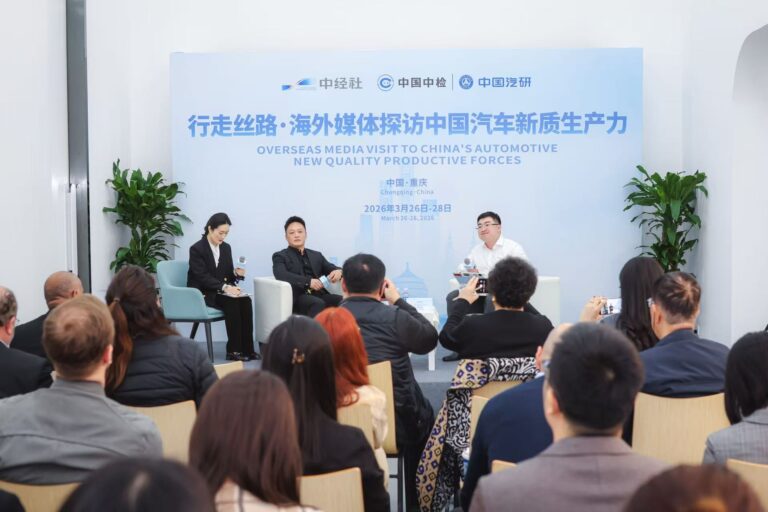
During the visit, delegates also attended a Q&A session with Wang Honggang, Deputy General Manager of CAERI, who highlighted the institute’s growing role in uplifting national automotive standards and strengthening safety frameworks across China’s rapidly evolving vehicle industry. As a national-level research and testing institution, CAERI provides technical support for vehicle certification, product testing and regulatory development, serving as a key pillar in China’s automotive innovation ecosystem. Ironically, China’s industrial success has also created a structural challenge: manufacturing capacity that increasingly exceeds domestic demand. Chinese automakers are therefore expanding aggressively overseas to establish production bases and bypass trade barriers.
Southeast Asia and Latin America have become key destinations, and Thailand has emerged as a regional EV manufacturing hub, while Indonesia has leveraged its nickel resources, critical for battery production to attract investment from Chinese manufacturers, also Brazil and Mexico are also positioning themselves as entry points into the Americas.In contrast, Sri Lanka’s flagship BRI-linked industrial project, the Hambantota Industrial Zone anchored by Hambantota Port, has yet to attract major high-technology manufacturing in sectors such as EV components or automobile assembly. This absence is particularly striking given China’s domestic emphasis on developing what it calls “new productive forces,” a national strategy prioritizing advanced manufacturing, electric mobility and global industrial expansion. Geographically, Sri Lanka occupies one of the most strategic maritime locations in the Indian Ocean, positioned along the world’s busiest east-west shipping routes just south of India. In theory, its ports and logistics infrastructure could support export-oriented manufacturing aimed at markets in South Asia, the Middle East and Africa, but geography alone does not create industry. Without coherent industrial policy, specialized labor ecosystems and strong technology partnerships, strategic location risks becoming merely a latent advantage rather than a realized economic opportunity. This is where the Colombo Port City could potentially play a transformative role, rather than focusing primarily on financial services and real estate, the project could evolve into a platform for attracting technology firms, regional headquarters and research centers linked to advanced manufacturing. Global automotive companies increasingly establish overseas R&D hubs and sales headquarters alongside production networks. Sri Lanka could leverage Colombo Port City as a neutral international business zone where Chinese EV manufacturers establish regional innovation centers or commercial platforms for South Asia, the Middle East and Africa.
Recent geopolitical developments in middle east, also highlight the strategic relevance of Sri Lanka’s infrastructure to cities as Dubai, Doha etc. Facilities such as Mattala Rajapaksa International Airport, Colombo Port City, expressways, ports and energy infrastructure collectively form a significant logistics platform in the Indian Ocean. As global supply chains diversify amid geopolitical tensions, international investors are once again reassessing Sri Lanka’s connectivity advantages. Yet the country still lacks what might be described as a “full-stack” industrial strategy. Infrastructure alone does not guarantee industrialization. It must be combined with targeted incentives, technology partnerships and institutional frameworks that align foreign investment with national development goals.
One possible pathway is the development of foundational industries that support advanced manufacturing, with Australia among the world’s largest iron-ore exporters and India’s industrial growth accelerating, Sri Lanka could position itself as a regional hub for intermediate steel processing and industrial inputs supporting sectors such as automobiles, shipbuilding and heavy engineering. Equally important is institutional capacity, as countries that successfully attract automotive manufacturing typically build research institutions, technical universities and testing facilities that support innovation ecosystems. Establishing institutions similar to the China Automotive Engineering Research Institute could allow Sri Lanka to develop capabilities in vehicle testing, certification and electric-mobility research. There is also a broader strategic concern, as Sri Lanka’s recent distancing from certain forms of technical cooperation with China, particularly in maritime research, may inadvertently weaken links to technological ecosystems that increasingly shape global industrial investment. In today’s innovation-driven economy, research collaboration often precedes large-scale manufacturing investment. Ultimately, the question is not simply whether Sri Lanka has missed the bus, but whether it still has time to catch the next one.
The global transition to electric mobility is still unfolding, and supply chains for batteries, autonomous systems and charging infrastructure remain fluid. With clearer industrial policy, stronger institutions and a more strategic investment framework, Sri Lanka could still position itself within this evolving ecosystem. But the window is narrowing. As Chinese automotive giants accelerate their global expansion, countries that move decisively today will likely become the manufacturing hubs of tomorrow. Those that hesitate may find themselves watching the future of industrial development pass by.
End.
