The 2025 Golden Panda Awards and the Rise of Regional Global Cinema putting the City of Chengdu in World Stage.
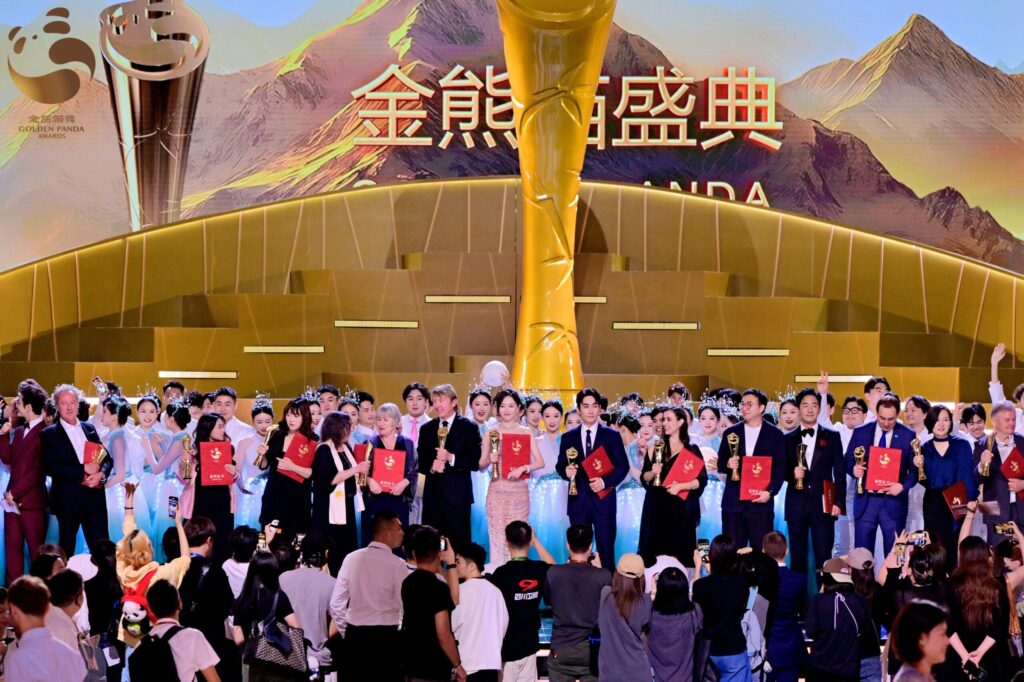
The 2025 Golden Panda Awards held in Chengdu on September 12–13, offered more than trophies and red carpets. Now in its second edition, the Golden Panda Awards convened thousands of filmmakers, producers, actors and cultural figures from across the globe to celebrate cinematic storytelling that bridges cultures and civilizations. The awards honoured achievements across film, TV drama, documentary and animation, drawing 5,343 entries from 126 countries and regions and emphasizing the international ambitions of the new festival. Among the main winners were a mix of international and Chinese works that underline the festival’s global outlook: Italy’s There’s Still Tomorrow took Best Picture, China’s blockbuster Ne Zha 2 won Best Animation, the Norwegian documentary A New Kind of Wilderness won Best Documentary, and prominent acting awards were presented to Zhu Yilong (Best Actor) and Brazilian actress Denise Weinberg (Best Actress). The TV drama She and Her Girls, based on the real-life work of educator Zhang Guimei, won Best TV Drama (and Best Screenplay), underscoring the festival’s balance of international outlook and Chinese stories with deep social resonance.


Why Chengdu? The answer mixes heritage, creative policy and ambition. Long celebrated at home for spicy cuisine and as the home of the giant panda, Chengdu has been actively repositioning itself as a creative, cultural and innovation hub part of strategic city plans to become influential in design, cultural industries and international cultural exchange. UNESCO lists Chengdu as a Creative City (gastronomy), and municipal cultural plans and recent global conferences in the city demonstrate a concerted drive to build globally competitive creative clusters. Hosting the Golden Panda Awards places Chengdu at the intersection of tourism, culture and creative industry policy, and helps the city translate cultural identity into global city credentials.
The Golden Panda Awards are designed to be more than a competition: they are explicitly framed as a platform for cultural dialogue. Organised by national and provincial cultural institutions, the awards use the panda symbol to signal openness and exchange, and they pair the ceremony with a Golden Panda International Cultural Forum focused on “Harmony in Diversity, A Future in Unity.” This pairing, festival plus forum, creates a space where creative trade, coproduction opportunities and cross-cultural dialogue can accelerate Chengdu’s creative ecosystem into the international mainstream.
From a regional perspective, the awards also matter because they lift up global cinema in a way tailored to local ecosystems. For filmmakers and producers in South and Southeast Asia, for instance, Chengdu offers geographic proximity, shared production pipelines, and increasingly accessible markets. Regional cinemas often struggle to get visibility in a packed festival calendar; a high-profile event in Chengdu can draw attention to regional storytellers, encourage co-productions with Chinese studios, and create distribution pathways that keep creative value within the region rather than funneling it solely toward Hollywood or European festivals.
Culturally, the Golden Panda Awards merge with a larger regional conversation: China’s Global Civilization Initiative proposed by President Xi in March 2023 emphasizes respect for civilizational diversity, mutual learning and dialogue among peoples. Festivals and awards—by encouraging stories that cross linguistic and cultural boundaries—are practical tools for that ambition. Film and television are uniquely well-suited to “mutual learning” because they show lived experience, not just policy statements; a festival that celebrates diverse narratives becomes a living example of cultural exchange at scale.

This does not mean the festival is merely symbolic. The Golden Panda Awards have already demonstrated concrete, industry-facing outcomes: juries led by internationally respected filmmakers and industry figures open networks that creators can tap; cross-border submissions and jury attention create momentum for sales, festival circuits and co-productions; and a major cultural event in Chengdu shifts where executives, scouts and buyers plan their travel and deals. For cities like Chengdu, these are the building blocks of a global cultural economy talent attraction, creative jobs, film tourism and intellectual property flows that support local industries.
A regional identity is also at stake. When awards prioritize stories from and about the Global South and Asian contexts, they help build a media architecture where regional voices are not secondary curiosities but primary contributors to film culture. By lifting regional work alongside established international titles, the Golden Panda Awards can help create a shared sense of cinematic identity for the region one that still respects local specificity while engaging global audiences.
On a personal note tied to this event: BRISL was invited to the Golden Panda Awards by the organising team. At the ceremony and forum, Yasiru Ranaraja met Chinese celebrity Tan Weiwei and invited her to visit Sri Lanka, an example of how cultural events become ports of human connection and future collaboration. This invitation reflects BRISL’s active cultural diplomacy and the soft-power potential that festivals like Golden Panda put into motion.
In sum, the 2025 Golden Panda Awards did more than hand out prizes. They reinforced Chengdu’s emergence as an international cultural hotspot, offered a concrete platform for regional and global cinematic exchange, and illustrated how cultural diplomacy—when grounded in festivals, forums and people-to-people meetings—can make cities and regions more visible on the world stage. If Chengdu and the Golden Panda Awards continue on this path, they will be a model for how mid-sized global cities can use culture to amplify regional voices and shape the next chapter of global cinema.
