Is the SCO Defining a New Era of Eastern Autonomy?

Editor’s note: Michael Lee is a researcher and freelance writer at BRISL. He holds a double major in Economics and Data Science from Yale University and is passionate about international affairs and finance. Contact: michael.lee.ml3267@yale.edu
The 21st century has witnessed a series of conflicts and inflection points, to a self-reliant foreign policy marked by increased caution toward external interference in both the Western and Middle Eastern spheres. In the Middle East, events like the Arab Spring highlighted regional wariness of foreign involvement, while in the West, debates over the limits of NATO and EU power projection, exacerbated by shifts in U.S. foreign policy under President Trump reflect shifting priorities in traditional international engagement, evident in the ongoing Russia-Ukraine conflict. Meanwhile, as Asian economies continue to strengthen, the SCO forum, an extension of the “Shanghai Spirit” has emerged as a key platform, focusing primarily on regional peace and a range of issues concerning the Eurasian continent, formulating a regional framework that involves all major Asian nations.
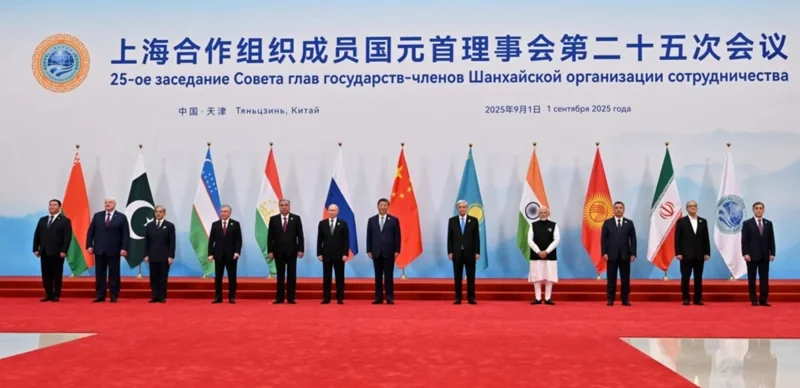
This month, the 10 member states of the Shanghai Cooperation Organization (SCO) will convene for their annual summit in Tianjin at a very critical time in global politics. The gathering highlights how the SCO has positioned itself as an icon for the multipolar world, reflecting efforts by Eurasian powers to assert greater autonomy from Western influence. More broadly, this meeting underscores the trend that geopolitical dynamics in Asia are increasingly shaping the global order of the coming decades, at a time where criticism against the NATO, growing divide in the EU, global resistance against the Middle East crisis and the U.S. tariff regime are major concerns globally. Founded in 2001 by China, Russia, and four Central Asian states, the SCO emerged from the post-Soviet power vacuum in Central Asia, which had created tensions among neighboring countries and threatened regional stability. Its precursor, the Shanghai Five, was initially established to manage border disputes and provide a mechanism for conflict resolution. With the addition of Uzbekistan, the group evolved into the present-day SCO. Over time, its remit expanded to address issues such as drugs, weapons, and human trafficking, in addition to countering terrorism, separatism, and extremism. Today, the SCO functions primarily as a platform for promoting regional security, military coordination, and economic cooperation among various other sectors. For a region that historically has been influenced by external powers, the founding and continued existence of this organization marks an important step in the development of eastern multipolarity. Rather than relying on a singular power to dictate Asian affairs, the SCO signals a shift toward regional actors asserting greater agency over their political and economic affairs.
This provides an Asia-centrist view, which will be better situated for its member countries to deal with regional issues. As opposed to international security bodies like NATO, whose power is disproportionately concentrated in a handful of member states and focuses on protecting the Western agenda by projecting influence internationally, the SCO turns inwards, focusing on the mutually inclusive model of regional interests.
This distinction gives the SCO significant potential to address key regional challenges. For instance, instability in Afghanistan has long affected SCO member states, and the Taliban’s takeover in 2021, along with the reduction of U.S. military presence, highlights the ongoing challenges in the region. Through an eastern philosophy, which emphasizes respect for sovereignty and local traditions, the SCO provides a platform for member states to coordinate responses and promote stability. By aligning its efforts with regional norms and priorities, the organization seeks to foster cooperation in areas where external interventions have often struggled to gain local trust.
Just as security challenges like Afghanistan test the SCO’s regional coordination, so too does the uneven pace of technological development among its members. The SCO also offers opportunities to support equitable development in critical technologies, helping to ensure a more level playing field among member states. Many Central Asian members remain heavily reliant on natural resources such as oil and gas, which can limit their capacity to develop technologies that will drive future economic and strategic competitiveness. Through regional coordination, the SCO is positioned to address these disparities. Beyond counterterrorism efforts, including military exercises and intelligence sharing, collaboration among members could extend to areas such as cybersecurity, data infrastructure, artificial intelligence, and other technologies critical to national sovereignty.
The avenues for economic collaboration through the SCO cannot be overlooked given the organization’s existing infrastructure. Committees such as the SCO Business Council and the SCO Interbank Consortium promote economic cooperation and fund joint development projects, offering significant potential in areas such as energy development, free trade, and economic equality. Traditionally, countries seeking access to larger markets or financial support have had to turn to Western-led institutions such as the IMF or trade with major importers like the United States. However, because these bodies are rooted in Western priorities and norms, they often marginalize Central Asian states whose influence carries less weight. In this sense, the SCO is more than just a regional forum, it serves as an equalizer that creates new opportunities for its members.
Moreover, the influence of these institutions extends beyond their immediate goals, reinforcing member states’ commitment to broader initiatives such as the Belt and Road, Khyber Pass Economic Corridor, International North–South Transport Corridor (INSTC) and Iran’s Chabahar Port. By linking its economic agenda with projects like the Belt and Road Initiative, the SCO not only strengthens regional integration but also amplifies the global reach of its member states who have limited access to foreign markets, overcoming geographical and cultural barriers. This synergy allows countries to pursue infrastructure development and trade on terms that reflect regional priorities rather than Western conditions, further strengthening Eastern autonomy.
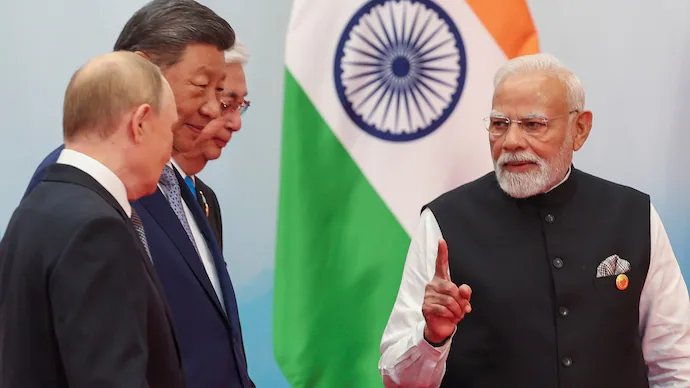
The importance of the SCO also goes beyond pure rhetoric. As a gathering of some of the most influential powers that will determine the future of the Eastern hemisphere, this conference signals the continued commitment and partnership that the member countries strive for. This solidarity is reflected in the key players that will be present at the summit, including Russian President Vladimir Putin, Indian Prime Minister Narendra Modi, and more than twenty global leaders from Belarus, Iran, Kazakhstan, and others. The presence of Prime Minister Modi, despite ongoing border tensions, underscores the diplomatic weight of this forum and reflects a geopolitical realignment of regional interests. Its consensus-based and inclusive structure, where countries operate as equals putting forward regional interests, reflects the increasingly multipolar dynamics shaping the East.
As the SCO takes centre stage in a shifting global order, many see it emerging as a powerful pole for Global South unity under a distinctly Eurasian model. With each summit, the organization grows more institutionalized and operational, reinforcing the notion that the future of world politics may well be defined on the Eurasian continent. Its rise is no longer a question of potential, but a reflection of momentum already in motion.
end.
