BRISL Reiterates Sri Lanka as a High-Quality BRI Partner at the UNESCO Yangtze Culture Forum in Nanjing.
The 2025 Yangtze Culture Forum opened in Nanjing with more than 300 guests from over 30 countries, featuring prominent speakers such as Xin Changxing, Secretary of the CPC Jiangsu Provincial Committee; Fu Hua, President of Xinhua News Agency; and UNESCO Assistant Director-General for Natural Science Lidia Arthur Brito. Xin highlighted the Yangtze River’s central role in shaping China’s historical geography and cultural identity, while Fu Hua emphasized its function as a conduit of civilizational exchange, strengthening the Global Civilization Initiative. Brito echoed UNESCO’s commitment to environmental sustainability, noting that the Yangtze’s green development reflects an essential harmony between humanity and nature.
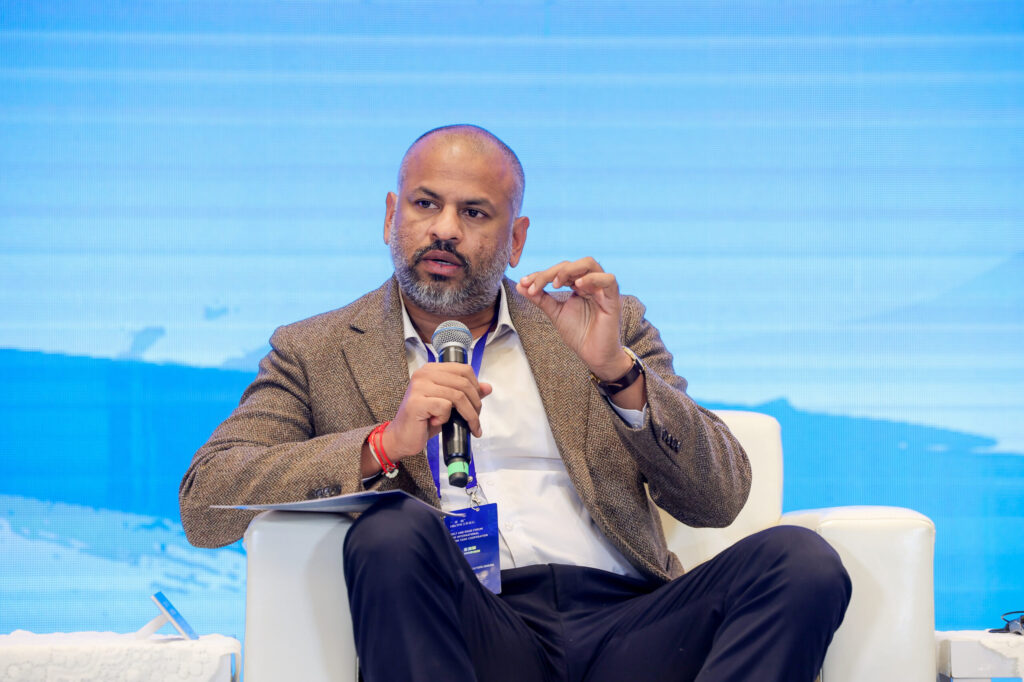
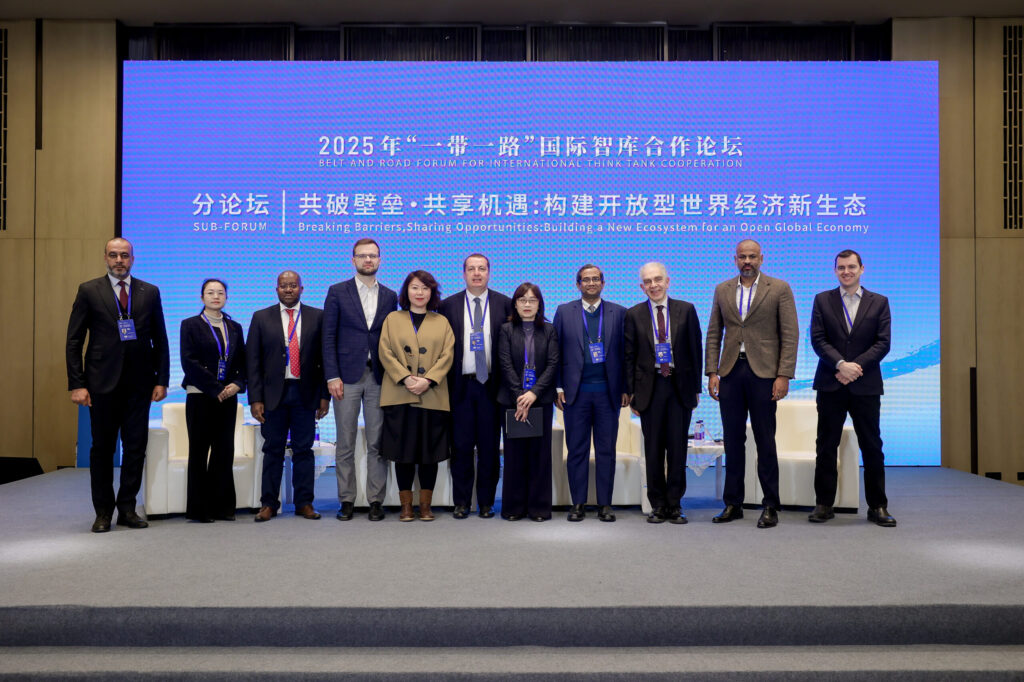
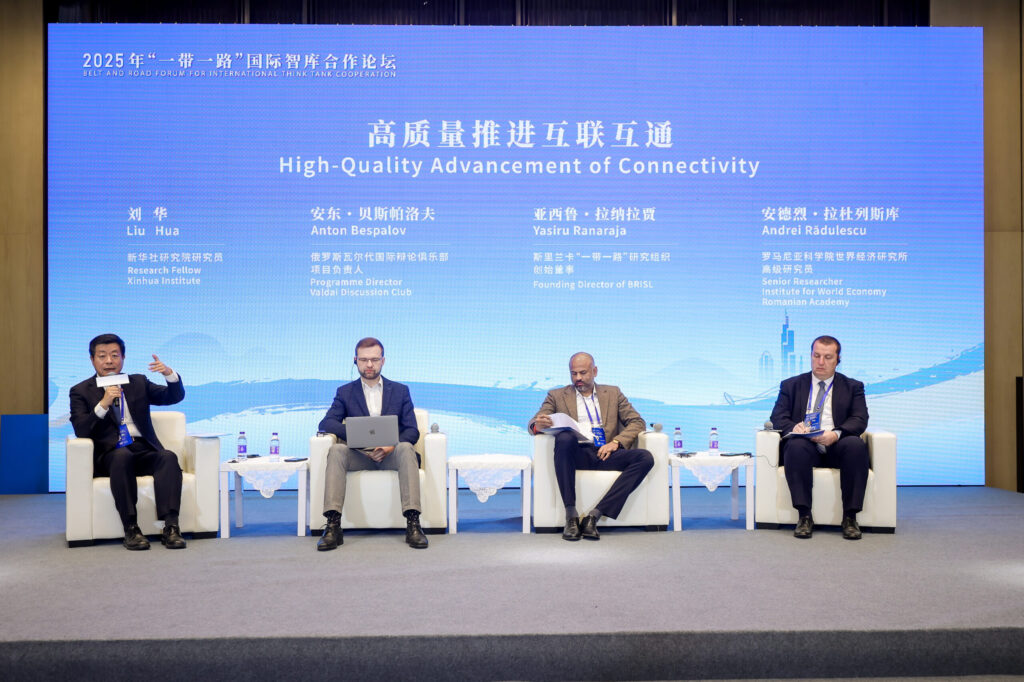
Amid this high-level setting and a pressing topic, Belt & Road Initiative Sri Lanka (BRISL) was invited to share Sri Lanka’s decade-long experience as an early and active BRI partner. Representing BRISL, Founding Director Yasiru Ranaraja delivered his remarks reflection on the evolution of BRI connectivity, its civilizational roots, and Sri Lanka’s position as a critical case study of both opportunity and challenge.
Ranaraja began by grounding the BRI within the deeper history of Asian civilizations. He noted that although the modern BRI is widely understood as a global infrastructure and development platform, its conceptual foundation is anchored in ancient civilizational exchanges—especially those shaped by great river systems such as the Yangtze. The BRI, he emphasized, is not a new idea imposed on Asia; rather, it is a contemporary expression of the continent’s long-standing traditions of exchange, mobility, and cultural fusion. In this sense, the Yangtze River—often called the cradle of Chinese civilization—symbolizes the BRI’s attempt to reconnect Asia with its historical legacy of openness and integration.
He then highlighted that when the BRI was officially launched and first formalized at the 2017 Belt and Road Forum in Beijing, more than 130 countries attended, demonstrating a level of regional and interregional convergence unprecedented in Asia’s modern political history. For a continent often described as too diverse—politically, culturally, and economically—to fit into a common regional framework, the BRI represented Asia’s first large-scale attempt to articulate a shared development model and connectivity vision. It demonstrated that despite differences, Asian nations were willing to discuss a collective future grounded in trade, mobility, and people-to-people links.
Despite its impressive reach, Ranaraja also acknowledged that the BRI has faced significant setbacks. Independent research institutions, including AidData and the Council on Foreign Relations, have documented that hundreds of BRI-linked projects have been suspended, cancelled, or stalled due to cost overruns, political transitions, environmental concerns, or weak domestic institutions. AidData estimates that by 2021 at least 94 major infrastructure projects had been cancelled globally, while CFR lists more than 2,500 projects facing delays or termination across its broader dataset. These outcomes represent billions of dollars in lost or frozen capital, revealing that large-scale connectivity initiatives are inherently risky—particularly in countries with fragile fiscal systems. Ranaraja stressed that because developing nations often struggle to access international financing on equitable terms, they must maximize the developmental value of platforms like the BRI by ensuring transparent governance, strong regulatory frameworks, and alignment between national priorities and long-term project design.
Turning specifically to the BRI’s development over the past decade, Ranaraja noted that it has mobilized more than one trillion USD in construction contracts and investments across a network of nearly 150 countries. The Maritime Silk Road now links 117 ports in 43 countries, while the China–Europe Railway Express has surpassed 70,000 freight trips, connecting over 200 cities across 25 European states. The BRI’s aviation dimension has also matured, with China signing bilateral air transport agreements with more than 100 partner countries, underscoring its shift from a land-based trade network to a multidimensional connectivity system. Ranaraja used Sri Lanka as a case study to illustrate the nuanced interaction between hard infrastructure, soft connectivity, and international investment law, focusing on Hambantota Port and Colombo Port City—two of the BRI’s most visible projects worldwide.
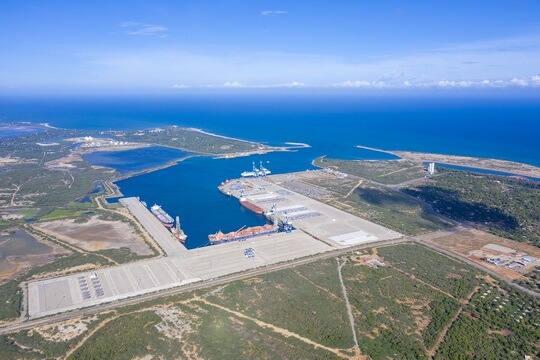
Hambantota Port, he explained, is often discussed purely as a geopolitical flashpoint, but the real story is rooted in Sri Lanka’s longstanding twin-deficit crisis. The project itself had been proposed as early as the 1970s, long before China became involved, and its financing—largely from China Exim Bank—carried interest rates aligned with commercial norms at the time. The port’s challenges in its early years stemmed not from external predation but from domestic economic constraints, limited cargo volumes, and insufficient integration with national logistics networks.
However, in recent years, Hambantota has undergone a significant transformation. Cargo throughput surpassed 6 million metric tons by late 2025, representing triple-digit growth, while container handling surged from a negligible base to over 40,000 TEUs in under two years. Investments in cranes and terminal capacity have raised the port’s potential to one million TEUs annually. Automotive transshipment, LPG operations, bunkering, and energy services have expanded strongly—though congestion pressures recently reappeared as Sri Lanka lifted its vehicle import ban. The upcoming Sinopec refinery project, valued at USD 3.7 billion, is expected to elevate Hambantota’s strategic importance even further. Yet, as Ranaraja stressed, the port’s revival was not solely due to physical infrastructure. The 99-year lease agreement with China Merchants Port created legal predictability, aligning the project with international investment norms. This form of soft connectivity—legal clarity, investment protection, and regulatory stability was essential to attracting long-term capital and operational expertise.
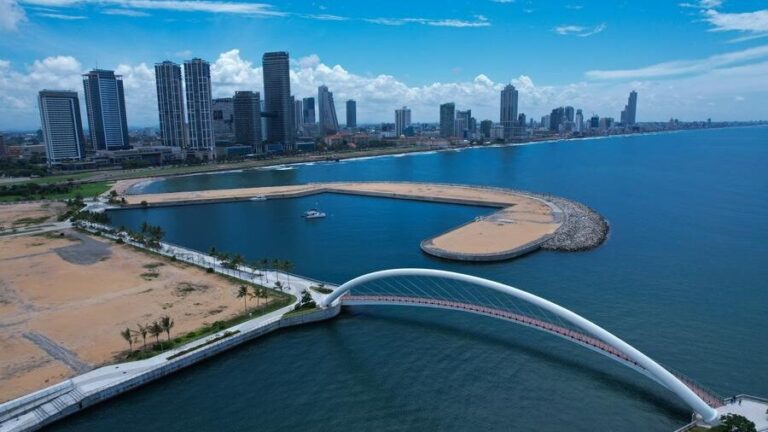
Colombo Port City, in contrast, began with fewer controversies but faced its own constraints. As Sri Lanka’s largest urban development and a flagship BRI project, Port City positioned itself as a gateway to high-value services—finance, technology, business operations, and luxury real estate. Its physical infrastructure was delivered efficiently, and the Port City Commission Act established a legal framework aimed at meeting international regulatory standards. These elements of soft connectivity gave the project credibility in global markets. However, Ranaraja noted that Port City has still struggled to attract the scale of top-tier global investors originally envisioned—demonstrating that even robust legal and physical frameworks must be matched with regional integration, branding, and market incentives to achieve full economic potential.
He contrasted the two projects as examples of how soft and hard connectivity interplay in shaping real outcomes. Hambantota started with strong hard infrastructure but weak regulatory and commercial linkages, creating early instability. Port City began with strong soft connectivity but still requires deeper integration with broader South Asian and Indian Ocean economic systems. Together, the two projects illustrate that no BRI investment can succeed solely through construction or legislation; success emerges only when physical infrastructure, legal frameworks, market linkages, and national policy all align.
In his concluding remarks, Ranaraja emphasized that Sri Lanka—having been one of the earliest BRI partner states—now carries lessons of strategic value for new BRI entrants, including emerging participants such as Brazil. Sri Lanka’s decade of experience demonstrates that BRI projects thrive when countries pair hard infrastructure with strong regulatory institutions, when local economic strategies align with regional connectivity goals, and when political stability supports long-term planning.
BRISL’s participation at the UNESCO Yangtze Culture Forum reaffirmed Sri Lanka’s position as a country capable of contributing meaningfully to the evolving architecture of the Belt and Road Initiative. As the BRI enters its second decade, Sri Lanka’s story—complex yet constructive, challenged yet ultimately progressive—offers a blueprint for how new partner states can navigate both the opportunities and the responsibilities of high-quality, sustainable connectivity.
